bollywood Movies.
Discover high-quality bollywood cinema across all streaming platforms.

Professor Vaman M.Sc
Using the moon’s rays, Professor Harnam invents a potion that turns man into a murderous beast. His brother Professor Vaman, realizing the dangers of this invention, realizes the urgent need of producing an antidote to avoid disaster. However, it is too late as Harnam’s daughter drinks the potion during a quarrel with her lover Detective Kishore and the city begins to witness a murder spree amongst its elite and wealthy citizens.

We Three
Mehboob presents the autonomous passion of Leela (Rose) for Moti (Motilal) who is promised to another woman, Bina (Maya). Leela is portrayed as irresponsible and impulsive as she acknowledges her desire for Moti and has a child by him. Bina then releases Moti from his promise. Moti suffers when he is told by Bina’s father (Sankantha) that she is dead, while Leela’s father (Pande) enjoins his daughter to commit suicide if Moti does not marry her. In spite of the film’s endorsement of ‘traditional’, lethally oppressive patriarchal mores, incarnated by the women’s fathers, Mehboob’s narrative at least dares to depict a woman who refuses to feel guilty about her desire.

Baghban
The naive Saroop (Nandrekar) romantically renounces earthly pleasures under the influence of a sadhu (Ashraf Khan). Arrested at a fairground and jailed, fellow convicts change his view of the world. Working in the prison’s garden, he meets the superintendent Sohanlal’s (Nazir) daughter Durga (Kumari), who was married as a child to a boy now believed dead. Ranjit (Singh) covets her and on her wedding day to the nasty Ranjit, it is discovered that Saroop was her child-husband.

Mera Ladka
Radical journalist Diwakar clashes with his traditional father and a scheming politician, Vithalrao, who seizes his newspaper. Disgusted, Diwakar leaves home. His wealthy girlfriend, Nalini, initially supports Vithalrao but later campaigns for Diwakar, who represents slum-dwellers in an election. Despite her father's support, Nalini urges voters for Diwakar. Nalini wins, but Diwakar's loss is depicted as a moral victory, critiquing middle-class materialism.


Meetha Zaher
Sohrab Modi's Meetha Zahar (Sweet Poison) is a social drama film that explores the devastating effects of alcoholism and advocates for prohibition. The narrative highlights the societal ills and personal ruin caused by alcohol, urging audiences to recognize the "evils of drinking."

Watan
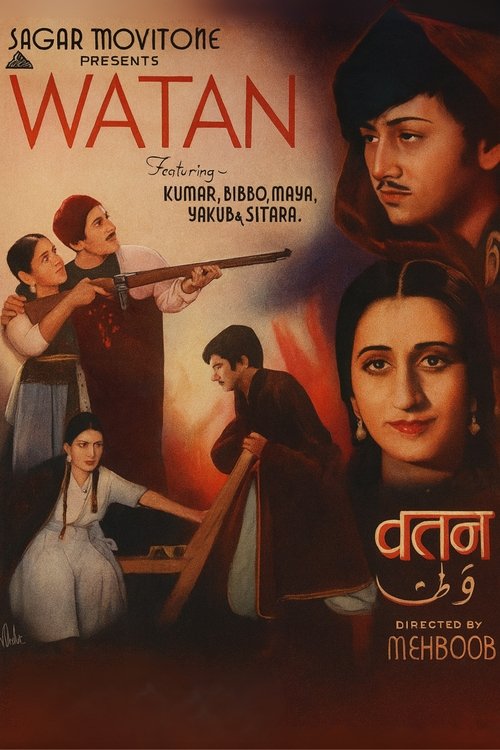
Ostensibly a Central Asian war fantasy about a conflict between the Cossacks and the Tartars, Mehboob’s film proposes a tale advocating national independence. The Cossacks are oppressed by the despotic Russian king (Siddiqui) and his minister Jabir (Kayamali), who has Tartar blood in him. General Murad (Kumar) covertly sides with the opposition, gets arrested for treason and escapes. He meets the wild Gulnar (Sitara Devi) and gets her to spy as a maid of Princess Nigar (Bibbo). Nigar falls for Murad and Gulnar withdraws from the scene for the sake of her nation. Eventually Nigar, at the head of an army of women, helps defeat the villains.

Double Cross
This modernization drama tells of Prof. Mukherjee (David), the inventor of a diamond manufacturing process. His uncle, the stockbroker Romesh Chandra (Gyani) who invests in diamond mines, faces bankruptcy because Sardar Mulkraj (Nayampally) plots to ruin the mine owner Rangnath (Mohan) and take power in the feudal state of Panipur. The invention can alter the power struggle if either of the factions gets hold of it.
Jailor
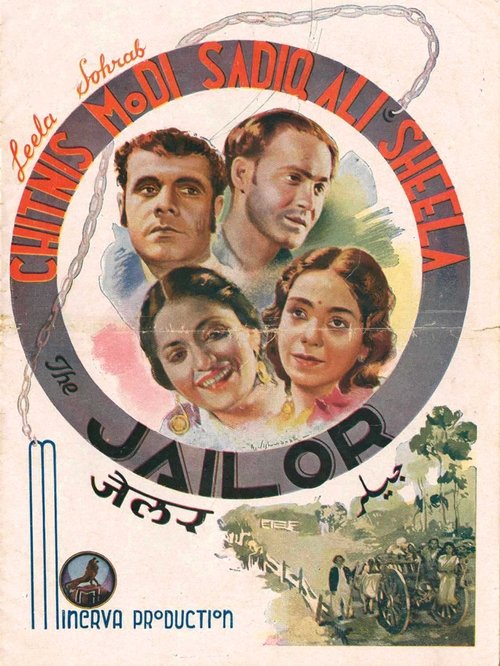
Modi's first psychodramatic role as a liberal man becoming a tyrannical jailer. He loses his wife to a lover who then goes blind. The jailer locks up his wife, Kanwal, in their own home, forbidding any contact with their child, Bali. Later the jailer himself falls in love with a blind woman.

Duniya Kya Hai
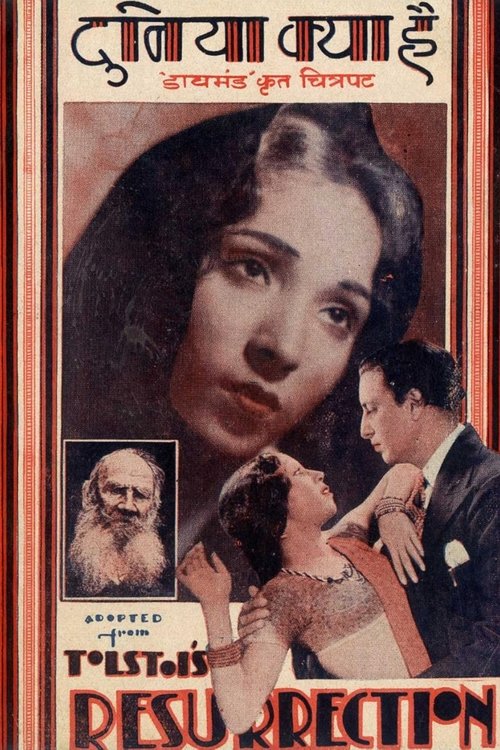
Based on Lev Tolstoy's Resurrection. An independent production by Lalita Pawar starring herself as a mistreated orphan called Lalita in this rare example of a melodrama drawn from a non-Indian literary source. Madhav (Kale), the son of the family, impregnates Lalita and promises to marry her on his return from Bombay. Years later, Madhav returns married, and refuses to recognise her. To feed her son, Lalita becomes a prostitute and is accused of a murder that takes place in the brothel. The prosecutor turns out to be Madha


His Highness
Queen Gulab is enraged when the throne bypasses her son for young Prince Kirit. Kirit is kidnapped during an outing with his bodyguard, Captain Dilip. Though Dilip is arrested, Ram and Rahim rescue the prince. The Queen persists in her schemes, even as a mysterious masked man repeatedly intervenes. She plots against the Minister, unaware that Princess Asha, Kala, Tiger, Bahadur, and Tommy are dedicated to protecting Kirit.


Hurricane Hansa
Hansa, daughter of Veer Singh, escapes an attack on her family by the villain Zalim Singh in which her mother is killed, her father injured and her sister Padma abducted. Growing up as a Harijan (an untouchable) she transforms the word to 'Hurricane', dons a mask and overthrows Zalim. She falls in love with Zalim's good son Diler. The horse Punjab-Ka-Beta features in its usual key role, rescuing Hansa when she hangs from a cliff, leaping over a wall of fire and aiding the love angle by nudging Diler into the pond where Hansa is having a bath.

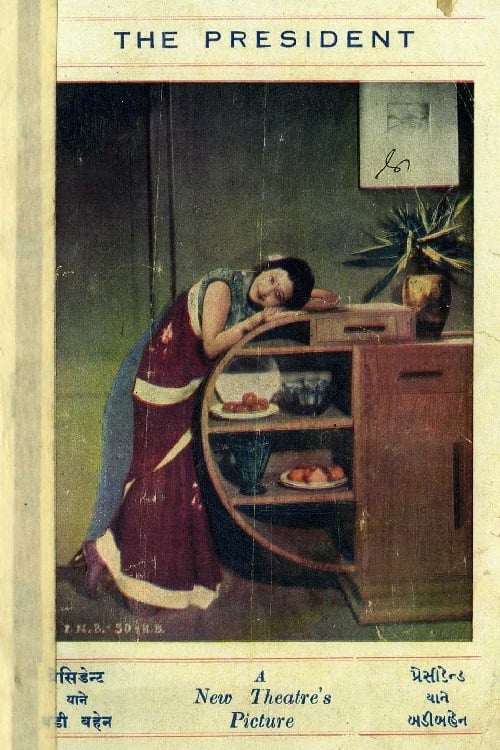
President
Badi Bahen aka President is a 1937 Hindi social romantic drama film (the Bengali version was called Didi and starred several different actors). The story according to the credit roll of the film is "A tale of love and greater love" developed on an idea by M. M. Begg. It was a love triangle with a social content that highlighted the conditions of the mill workers. It was also the first film to show a liberated educated woman managing her own factory


Pearl Necklace
"Moti Ka Haar" (1937), also known as "Pearl Necklace," is an early Hindi film directed by Jaddanbai, a pioneering woman in Indian cinema. Classified as both a fantasy and a social film, its plot likely explores the significance of a pearl necklace within a narrative that touches upon societal themes of the era. Featuring actors like Mehtab and a young Nargis, this film is a notable example from the nascent stages of Indian talkies.