🌟 Award-Worthy Movies (311 results)
Clear all filters
Nirmala
The story centres around a fisherman Sankaran who loses his wife struggles to bring up his two daughters Nirmala and Vimala. Sankaran’s sister Kalyani looks after the family. Sankaran meets with an accidental death while on a fishing expedition. Nirmala becomes a fish vendor.


Samadhan
A working-class leader confronts a villainous factory owner, falls in love with the boss's daughter unaware of her family origins and, after many adventures and setbacks, it is revealed that the hero is in fact the official heir to the property the villain had usurped. An influential Bengali novelist acknowledging allegiance to socialism, Mitra's studio-bound film concentrates on showing the milieu of the rich while the dialogues make numerous references to the workers and the poor.

Shakuntala
Following a passionate encounter with King Dushyanta (Chandramohan), the comely Shakuntala (Jayashree) finds herself pregnant and rejected by the royal court. She gives birth in a forest to a son which she names Bharat (Kumar Ganesh). When the King tracks his former lover down and tries to take her back, she flatly refuses him.

Dhiraj
Dhiraj (1942) was a Hindi social film directed by Chaturbhuj Doshi and produced by Ranjit Movietone. It featured actors like Sitara Devi and Ishwarlal. Dhiraj was banned by the British government due to alleged inclusion of "symbols like pictures of national leaders," suggesting a plot with nationalist themes.

Padosi
Hindi version of the film starring Mazhar Khan, Gajanan Jagirdar and Anees Khatoon. In a small village in India, the villagers of different communities live in harmony. But when an industrialist, arrives to construct a dam, he sows distrust and disunity between the Muslim and Hindi communities.

Nartaki
Roop Kumari (Leela Desai) a famous court dancer is forbidden entry into a temple monastery run by a strict disciplinarian Priest. The cast listed here is for the Hindi version, there is also a Bengali version with a different cast, but same director and release year.

Thikadar
Melodrama featuring a thikadar (forest contractor), a somewhat remote figure like the landscape in which he operates. The villain is the plantation-owner named Abani Haldar, with a beautiful daughter, Latika. The thikadar saves Haldar in an accident, while later it is revealed that Haldar killed the thikadar's father and left his wife and children for dead. Latika, who loves the thikadar, succeeds in preventing the forester from taking revenge for those crimes.

Holi
The evil Chand (Motilal) and his rich father Mangaldas (Date) persecute the nice Sunder (Ishwarlal): he kidnaps Sunder's sister Kokila (Khursheed) and frames him for theft. Sunder is jailed. The abducted Kokila succumbs to the villain's charms and her love reforms him. When released, Sunder, unaware of the fact that his enemy has reformed, seeks revenge on the very day that Chand and Kokila are to marry.
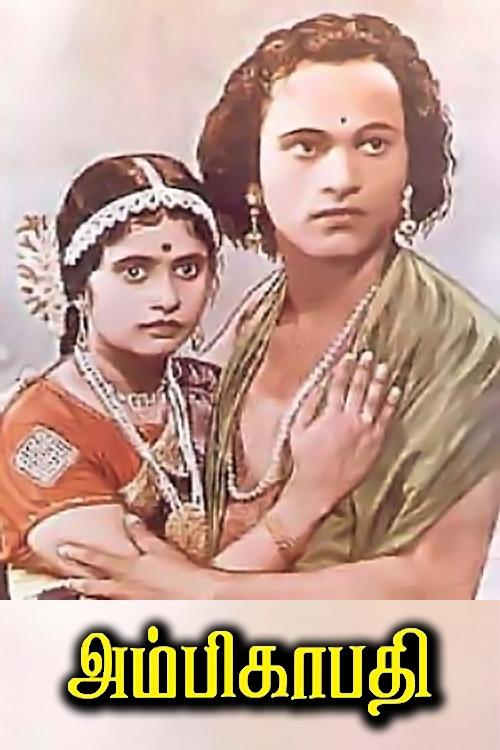
Ambikapathy
The film is based on a story set in the Chola Empire in year 1083 AD. The titular character in the story is Ambikapathy (M K. Thyagaraja Bhagavathar), the son of the Tamil poet Kambar (Serugulathur Sama) who is in love with the Chola princess and daughter of Kulothunga Chola, Amaravati (played by M. R. Santhanalakshmi). The king objects to their love and insists on testing Ambikapathy's literary mettle before judging his worth. The test given to Ambikapathi is that he should write and sing a hundred poems in the field of Puram (dealing with war and politics). The poems should not have any reference to the field of Aram (dealing of love and romance). Ambikapathi begins the test in the King's court with a Kadavul Vaazhthu (invocation to God). Amaravathi who is keeping the count, mistakes the invocation as a poem and counts it as poem number one.


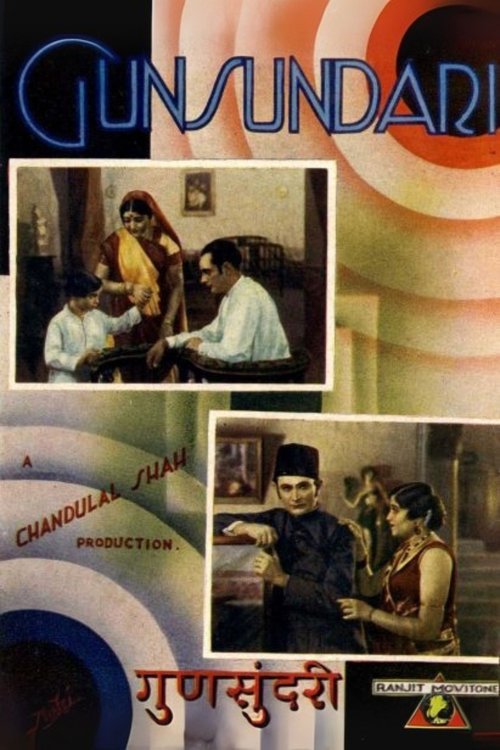
Gunsundari
Gunsundari, the dutiful wife, acts as savior for her troubled joint family. Her father-in-law Shyamaldas battles alcoholism and accusations, while her husband Chandrakant falls prey to villains and a prostitute, losing his property. Gunsundari also aids her sister-in-law Sushila through marital woes, facing personal trouble due to a secret. Destitute, she eventually reunites with a similarly down-on-his-luck Chandrakant on the streets. A coincidence ultimately reveals Shyamaldas left his property to his estranged son, leading to a happy ending.

Narasinh Mehta
The first Gujarati feature film is a saint film about the life of Narasinh Mehta (1408-75), played by Master Manhar. Mehta is known for his evocative Prabhatiyan (morning hymns) and especially for his composition Vaishnava jana to ('The Vaishnav is he who knows the pain of others') made popular by Gandhi, who also adapted the poet's term Harijan (children of god) for the nation's Untouchables. The film adheres to the Gandhian interpretation of Narasinh Mehta's work, avoiding e.g. miracle scenes.
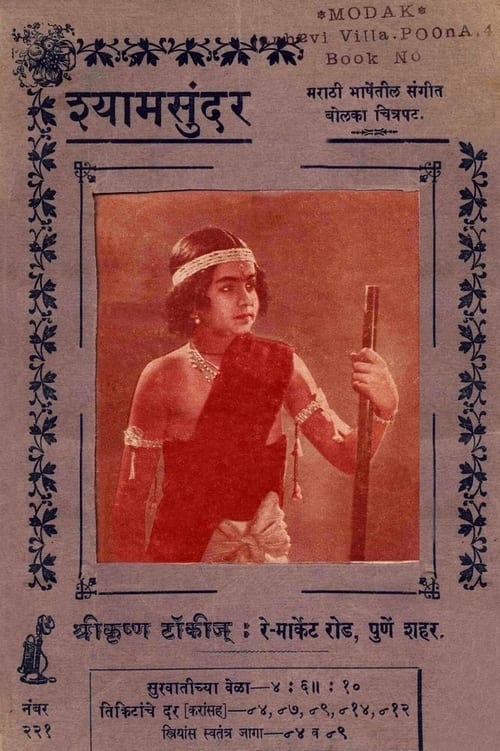
Shyam Sundar
Children's mythological drawn from the Vishnu Purana telling of the child Krishna (Modak). The film intercuts Krishna's rural escapades with Pendya and other childhood friends with palace intrigues in Mathura, where Kans receives a divine warning that the boy Krishna shall be the cause of his death.
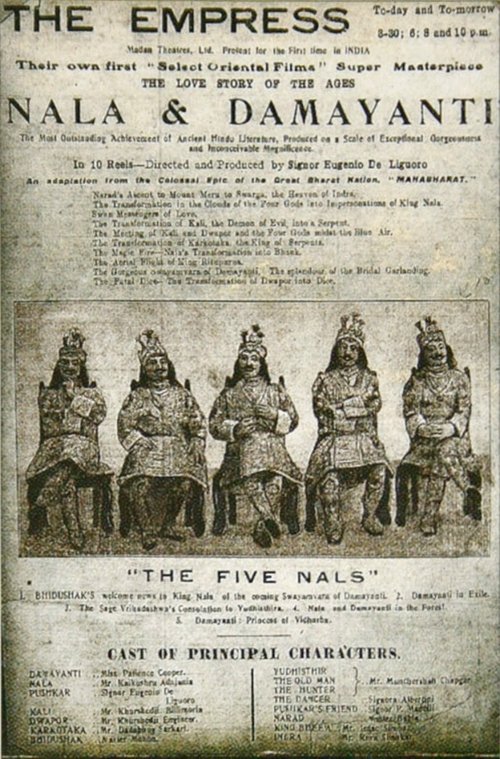
Nala & Damayanti
This big-budget film depicts a famous episode from the 'Mahabharata', starting with Narada's ascent of Mount Meru. It shows Swarga, the Heaven of Indra, the Transformation in the Clouds of the Four Gods into impersonations of King Nala, Swan Messengers of Love, the Transformation of Kali (the Demon of Evil) into a Serpent, the Meeting of Kali and Dwapor and the Four Gods amidst the Blue Air.